
Lingcod are aggressive, territorial predators that respond extremely well to large live or fresh-dead baitfish. While jigs account for many fish, a properly rigged live bait setup — particularly when sand sole, herring, or small rockfish are available — consistently produces the largest lingcod of the season. This guide covers the complete three-way swivel live bait rig used by experienced Washington bottomfish anglers.
The Three-Way Swivel Live Bait Rig
The three-way swivel rig separates the weight from the bait presentation, allowing the baitfish to swim and move naturally while the sinker holds the rig on or near the bottom. This natural movement is what triggers strikes from large, wary lingcod.
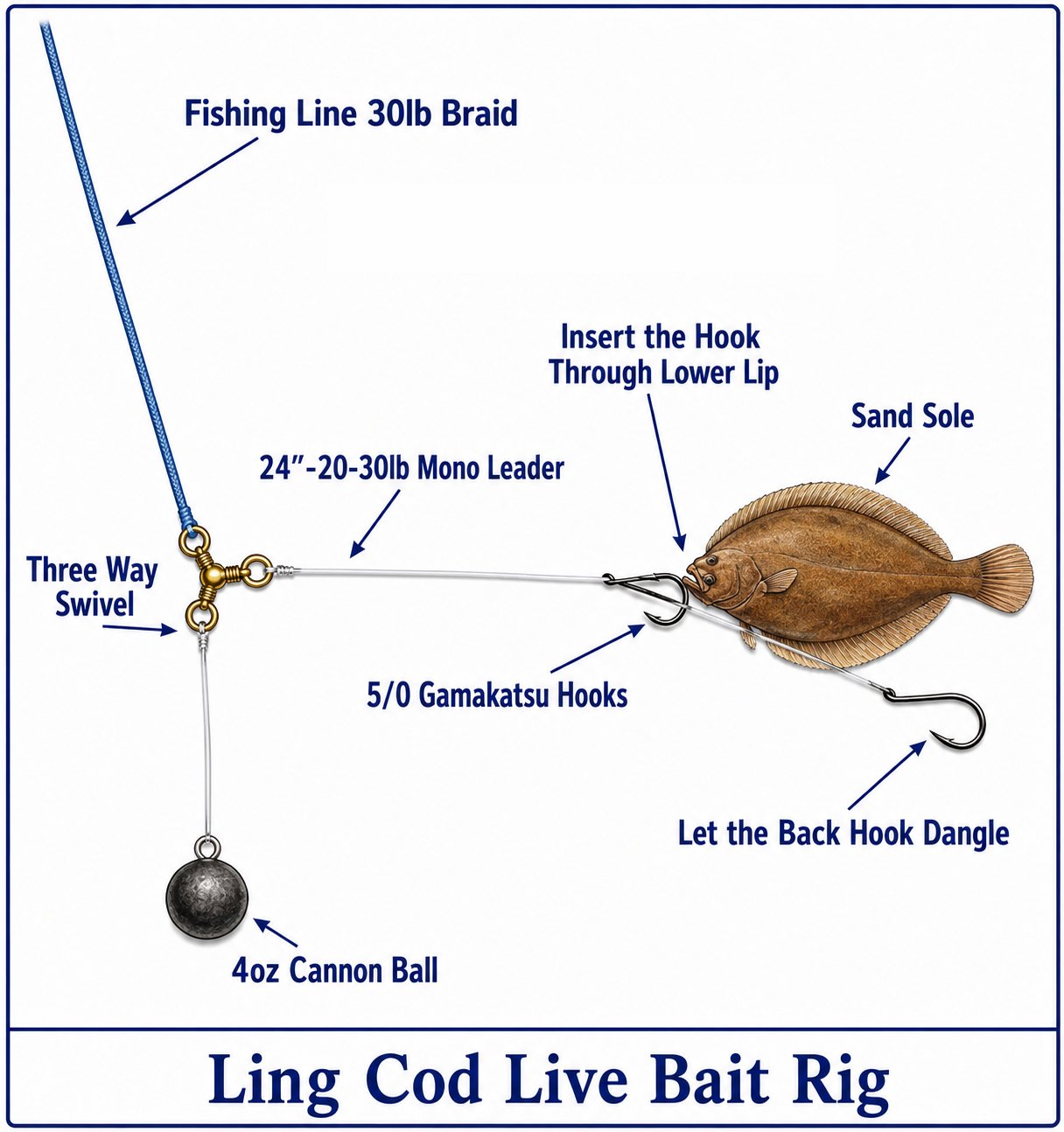
Components
Mainline: 30 lb braided line. Braid gives zero-stretch sensitivity so you can feel the bait moving and detect when a lingcod grabs it. The smaller diameter also reduces water resistance, helping your bait stay near the bottom.
Three-Way Swivel: A brass or stainless three-way swivel is the heart of the rig. Your mainline connects to one eye, the weight dropper to the second, and the bait leader to the third. A quality three-way swivel (size 3/0 or 4/0) prevents line twist from the rotating bait.
Weight Dropper: 8–10 inches of 20 lb monofilament from the bottom eye of the swivel to the sinker. Using lighter mono for this dropper means you break off only the weight if it snags on structure — not the entire rig.
Sinker: A 4 oz cannonball or torpedo sinker. Size up to 6–8 oz in stronger current or deeper water. The sinker needs to hold the rig close to the bottom where lingcod are holding.
Bait Leader: 24 inches of 20–30 lb monofilament from the swivel to the front hook. This length gives the baitfish room to swim naturally while keeping it within striking range of the bottom.
Hooks: 5/0 Gamakatsu hooks in a two-hook mooching setup. The front hook goes through the lower lip of the baitfish. The trailing hook hangs free alongside the body — do not embed it in the bait. When a lingcod grabs the bait, the free-hanging rear hook almost always finds purchase on the outside of the fish's mouth.
Best Live Baits for Lingcod
Sand Sole: The premier live bait for large lingcod throughout Puget Sound and the Strait. Sole are flat, active swimmers that create visible movement and produce scent. Hook through the lower lip only — the bait swims naturally and the rear hook dangles alongside. Sand sole can often be caught on small baited hooks in shallow areas near your lingcod grounds.
Herring: A large 5–7 inch herring hooked through the lower lip is a classic lingcod bait. Fresh-dead herring works almost as well as live. The herring's natural oils produce a strong scent trail along the bottom.
Small Rockfish: Where regulations permit, a small rockfish (legally retained incidental catch) makes exceptional lingcod bait. Hook through the lips — the rockfish's instinct to swim toward structure often places the bait exactly where lingcod are holding.
Smelt: Available seasonally, smelt are oily, scent-rich, and highly effective. Hook through the lower lip, allow the rear hook to dangle free.
Rigging the Live Bait
- Tie your mainline to the top eye of the three-way swivel using a Palomar or improved clinch knot
- Tie 8–10 inches of 20 lb mono to the bottom eye, attach your cannonball via a snap
- Tie 24 inches of 20–30 lb mono to the remaining swivel eye
- Tie your front hook to the leader end
- Attach the trailing hook via a 3–4 inch dropper from the front hook eye
- Insert the front hook through the lower lip of the baitfish — the point exits through the upper lip
- Let the rear hook hang freely alongside the body
Technique: Fishing the Live Bait Rig
Lower the rig to the bottom and immediately reel up 1–2 feet. You want the bait swimming just off the rocky structure where lingcod hold — not dragging on the bottom.
Hold the rod and feel the bait working. A live baitfish transmits constant movement through the braid. When a lingcod grabs it, the movement stops abruptly and you'll feel a heavy, solid resistance — not the sharp strike you might expect. Give the fish 2–3 seconds to turn the bait, then sweep the rod firmly upward for a solid hook set.
Lingcod often follow a hooked fish to the surface. When you're fighting a fish up from the bottom, have a partner drop a second jig or rigged bait down the same side of the boat — a follower will frequently strike.
Rod and Reel
Rod: 6.5–7.5 ft medium-heavy conventional rod rated for 30–80 lb. Enough sensitivity to feel the bait and detect the take, enough power to haul a large fish off deep rocky structure.
Reel: Medium-large conventional reel (Penn Squall 40, Shimano Tekota 400, or similar) with a reliable star drag. Spooled with 50–65 lb braid.
Leader at reel: 3–4 feet of 40–60 lb fluorocarbon between your braid and the three-way swivel. Fluorocarbon resists abrasion against rocky bottom and provides some invisibility versus straight braid.
Descending Device — Required Equipment
When targeting lingcod on rocky structure, rockfish bycatch is inevitable. In many Washington marine areas, a descending device is required by regulation. Keep one rigged and ready — a Shelton Fish Descender, SeaQualizer, or weighted hook on a separate rod. Any non-retained rockfish must be returned to depth immediately rather than released at the surface.
Gear We Recommend
| Gear | Link |
|---|---|
| Gamakatsu Octopus Hooks 5/0 | View on Amazon |
| Three-Way Brass Swivels | View on Amazon |
| 30 lb Braided Fishing Line | View on Amazon |
| Cannonball Sinkers 4-8 oz | View on Amazon |
| Shimano Tekota Conventional Reel | View on Amazon |
| Fluorocarbon Leader 40-60 lb | View on Amazon |
| Shelton Fish Descender | View on Amazon |
As an Amazon Associate I earn from qualifying purchases.
Verify current lingcod season dates, size limits, and depth restrictions at WDFW's fishing regulations page. Descending device requirements vary by area — check before fishing.