🌡 Cook to 160°F (71°C). Not negotiable, and not the same as other game. Bear can carry trichinella, and it is now the leading source of trichinellosis cases in the United States — so bear is never safe rare, however good it looks. A braise takes it far past 160°F anyway, which is part of why it suits the animal.
—
Not rated yet
Ingredients
- 3–4 lb bear shoulder or rump roast, trimmed of surface fat
- 2 tsp salt
- 1 tsp black pepper
- 2 tbsp neutral oil
- 2 onions, quartered
- 4 carrots, cut into large pieces
- 3 parsnips, cut into large pieces
- 6 garlic cloves, peeled
- 2 tbsp tomato paste
- 1 cup dry red wine
- 3 cups beef or game stock
- 2 bay leaves
- 4 sprigs thyme
- 1 tbsp cider vinegar
Directions
- Trim the outside fat back hard. Bear fat is heavy and strongly flavoured, and a braise will render far more of it into the pot than you want.
- Season the roast all over and heat the oven to 300°F.
- Brown the meat in the oil in a heavy dutch oven, several minutes a side, until it is properly dark. Rushing this step costs the finished braise most of its flavour.
- Lift the roast out, add the onions, carrots, parsnips and garlic, and cook until they take some colour.
- Stir in the tomato paste for a minute, then pour in the wine and scrape the bottom of the pot clean as it bubbles.
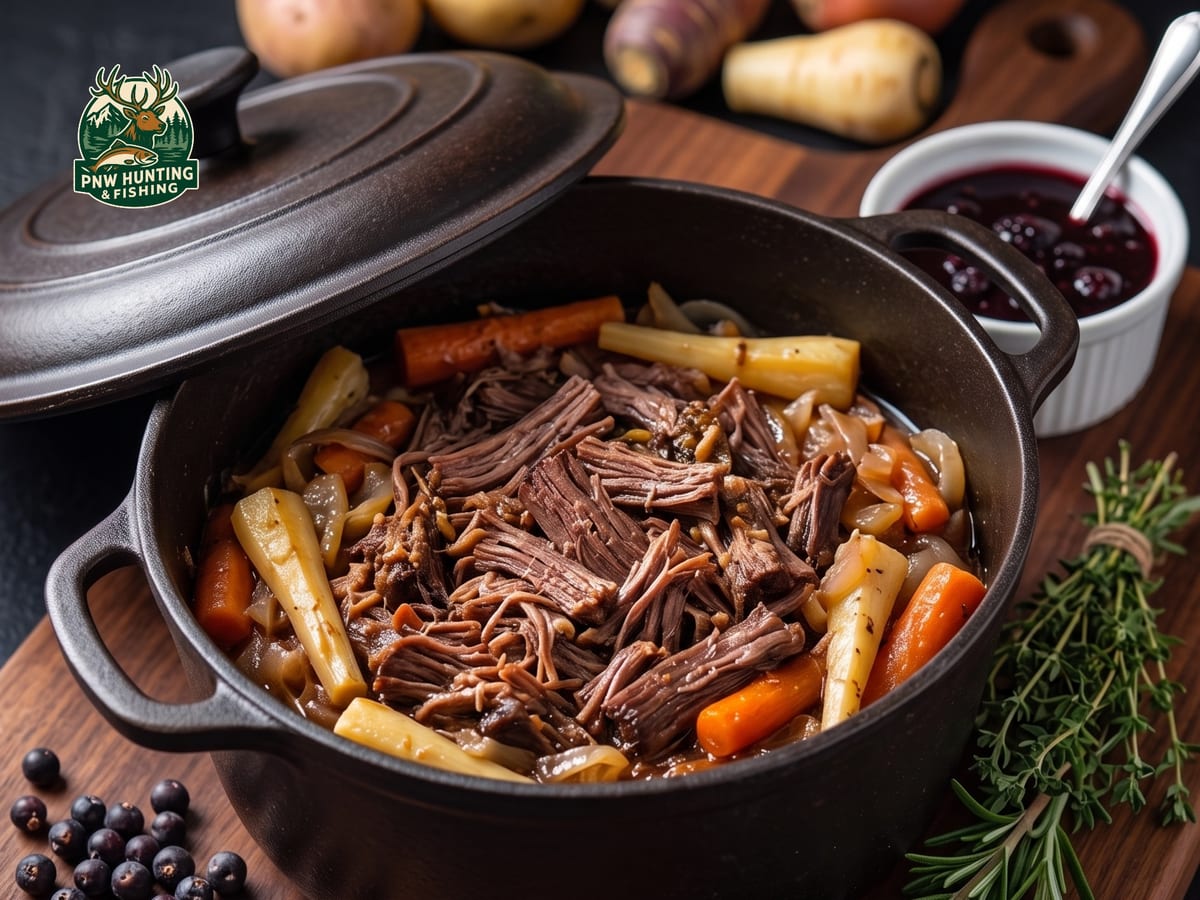
- Return the roast with the stock, bay and thyme. The liquid should come roughly two-thirds up the meat, not cover it.
- Cover and cook in the oven for 3½ to 4 hours, turning once, until a fork twists out easily and the internal temperature is well past 160°F.
- Lift out the meat and rest it. Skim the fat from the surface of the braising liquid, then reduce it on the stove until it coats a spoon.
- Add the vinegar, pull the meat into large pieces, and return it to the sauce with the vegetables.
Notes
A braise is the right call for bear precisely because the safety rule and the cooking method agree: the meat has to reach 160°F regardless, and long moist heat past that turns connective tissue to gelatin instead of drying the roast out. Use a thermometer rather than time — roasts vary, and this is not a cut to guess at.
Kit for this recipe
Links to Amazon. As an Amazon Associate we earn from qualifying purchases — it costs you nothing and helps keep the website free for all.
- Instant-read thermometer Every recipe here is written to a temperature, not a time.
- Enameled dutch oven Deep enough to hold a whole shoulder with liquid two-thirds up.