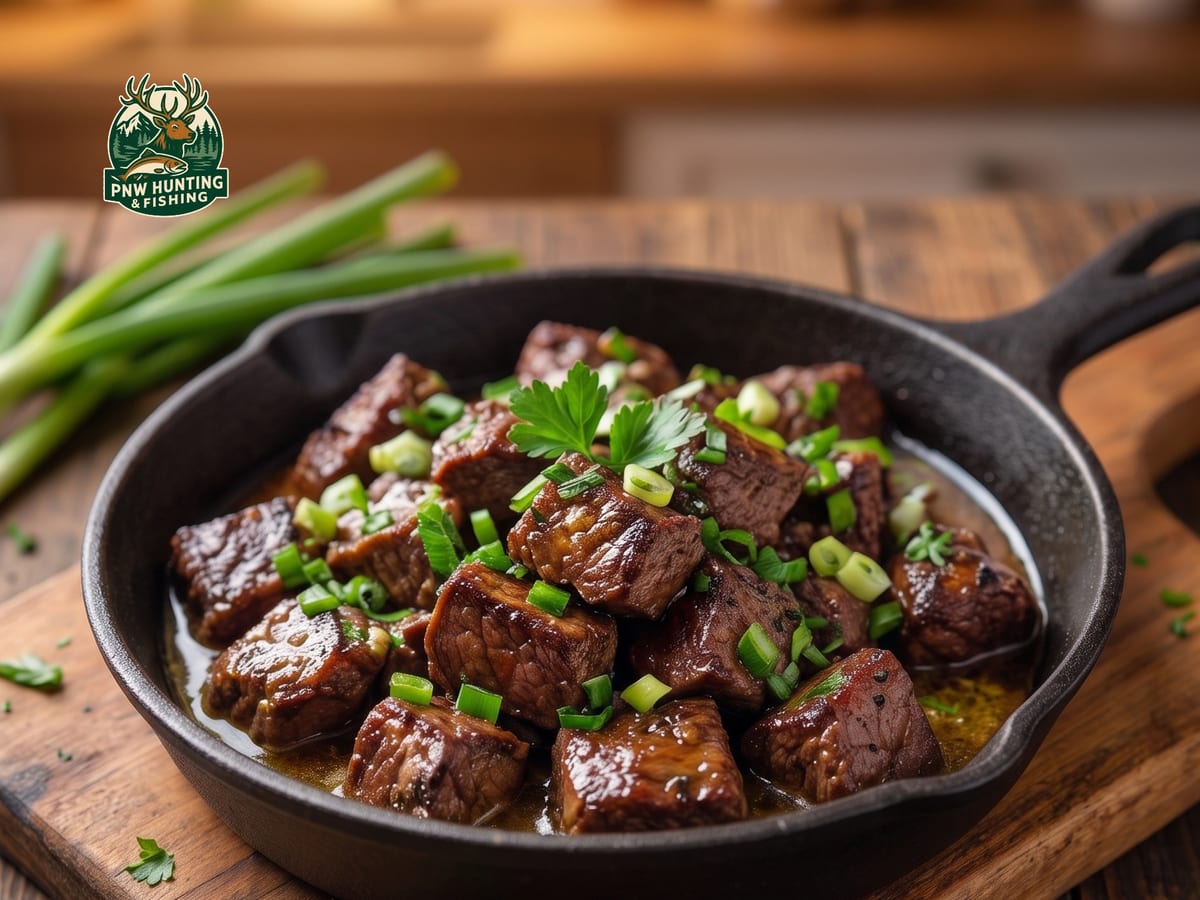
🌡 Cook to 130–135°F (54–57°C). Medium-rare for whole-muscle venison. These cubes are small and cook in seconds, so pull them early — carryover heat will take them further while they rest in the butter.
—
Not rated yet
Ingredients
- 1½ lbs venison backstrap or loin, cut into 1-inch cubes
- 1 tsp salt
- ½ tsp black pepper
- ½ tsp garlic powder
- 2 tbsp neutral oil
- 4 tbsp butter
- 5 garlic cloves, minced
- 2 sprigs fresh thyme
- 1 tbsp flat-leaf parsley, chopped
Directions
- Trim the silverskin and cut the venison into even 1-inch cubes so they finish at the same moment.
- Pat them dry and toss with the salt, pepper and garlic powder. Let them sit 10 minutes at room temperature — cold meat straight from the fridge steams before it sears.
- Heat the oil in a cast iron skillet until it is just smoking. This wants to be hotter than feels sensible.
- Add the cubes in a single layer with space between them, working in two batches. Crowding is what turns steak bites into stew.
- Sear 45 to 60 seconds a side, turning once or twice, until well browned but still giving when pressed.
- Drop the heat to medium, add the butter, garlic and thyme, and toss for 30 to 45 seconds until the garlic is fragrant. Any longer and it burns and turns bitter.
- Pull the pan off the heat at 130–135°F, scatter over the parsley, and spoon the pan butter over everything.
Notes
Venison has almost no intramuscular fat, so there is nothing to keep it juicy once it passes medium — this is a cut where two minutes of inattention is the whole difference. The garlic goes in at the end for the same reason it always should: it burns long before the meat is done.
Kit for this recipe
Links to Amazon. As an Amazon Associate we earn from qualifying purchases — it costs you nothing and helps keep the website free for all.
- Instant-read thermometer Every recipe here is written to a temperature, not a time.
- Cast iron skillet Holds heat when cold cubes hit it, which is the whole trick here.