Fish ID
Before you can fish for something, you need to know what it looks like. Washington State has dozens of species you might pull up — and some of them look similar enough to confuse even experienced anglers. Knowing your fish also matters for the law: keeping the wrong species, or one that's out of season, can cost you your license.
In this lesson you'll learn to identify the most common PNW fish by sight — their colors, markings, and key features that tell them apart.
Washington regulations often differ by species. Knowing exactly what you caught — Chinook vs. Coho, wild vs. hatchery — determines whether you can keep it or must release it.
Pacific Salmon
Five species of Pacific salmon live in Washington's waters. They all start life in rivers, head to the ocean, and return to freshwater to spawn. Each looks different depending on the season — ocean-bright fish look nothing like the same fish in spawning colors.
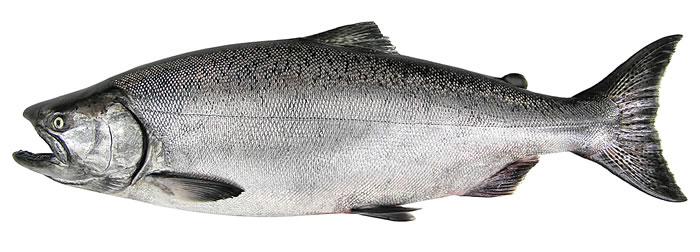
The largest Pacific salmon — Washington's state fish. Black gums, black spots on the back and both tail lobes. Ocean fish are silvery; spawning fish turn dark red to brown. Also called King salmon.
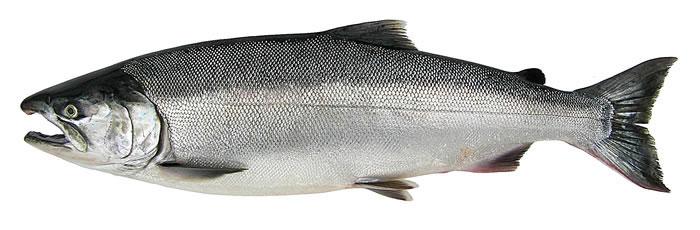
Bright silver in the ocean with small black spots on the back and upper tail only. White gums with a dark tongue. Spawning males turn brilliant red with a green head. Also called Silver salmon.
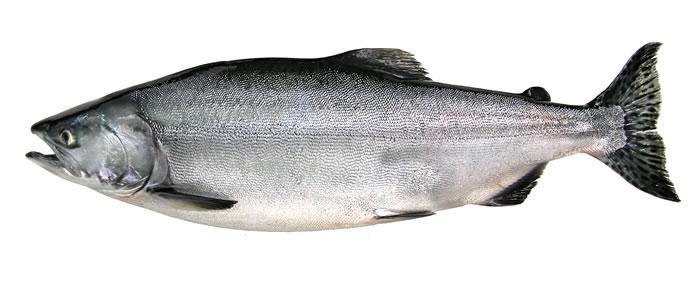
The smallest and most abundant Pacific salmon. Large oval spots on both tail lobes and back. Spawning males grow a dramatic humped back — which is why they're nicknamed "humpies." Run in odd-numbered years in most WA rivers.
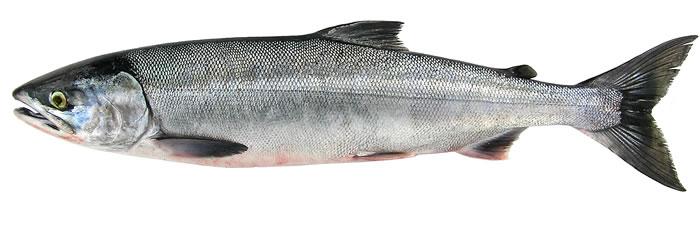
No spots in the ocean — the only Pacific salmon without them. Calico purple-green stripes appear as they approach spawning. Males grow large, canine-like teeth, earning the nickname "dog salmon."
Look at the gums. Chinook = black gums (all the way around). Coho = white gums, dark tongue. This one trick tells them apart instantly, even when the fish looks beat up from spawning.
Trout & Steelhead
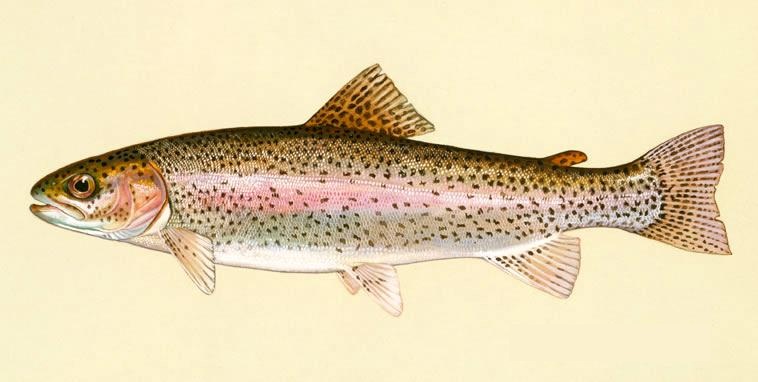
Pink-to-red lateral stripe, black spots on a silver-green body. The most widely stocked trout in Washington — found in lakes and rivers across the state. Steelhead are rainbow trout that migrate to the ocean and return.
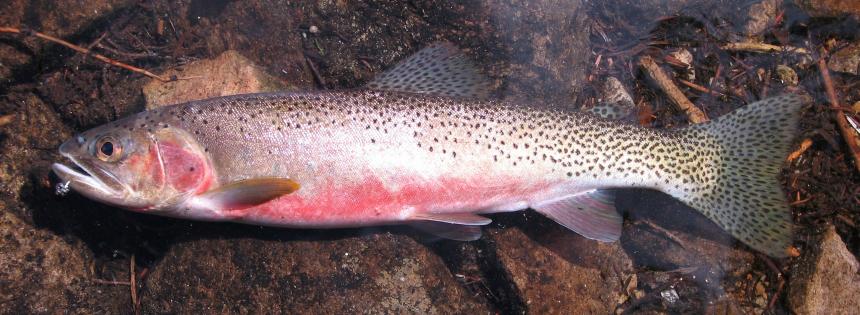
Named for the distinctive red-orange slash marks under the jaw. Heavily spotted with black and sometimes red. Washington's native trout — found in mountain streams, coastal rivers, and salt water. The red slashes are the easiest ID feature.
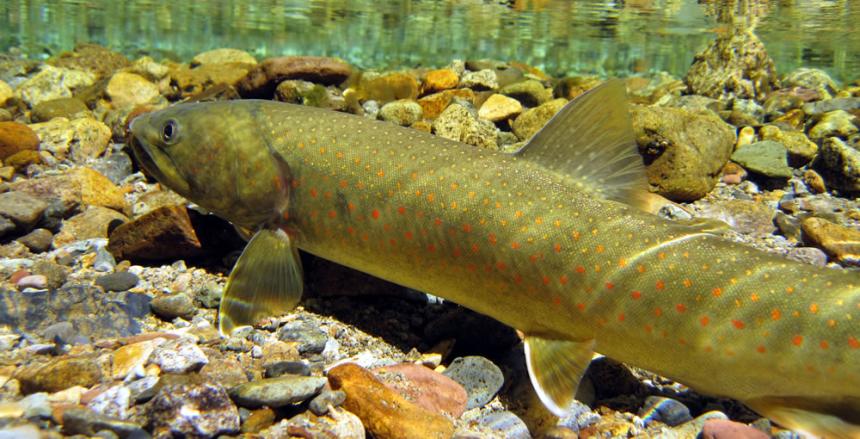
Light-colored spots (yellow, orange, red) on a dark olive-green body — no black spots. Important to identify because bull trout are a threatened species in Washington and must be released immediately if caught.
Bull trout are federally threatened in Washington. They look like other trout but have light-colored spots and no black spots. If you catch one, wet your hands, remove the hook gently, and release it right away. Do not keep it.
Saltwater Species
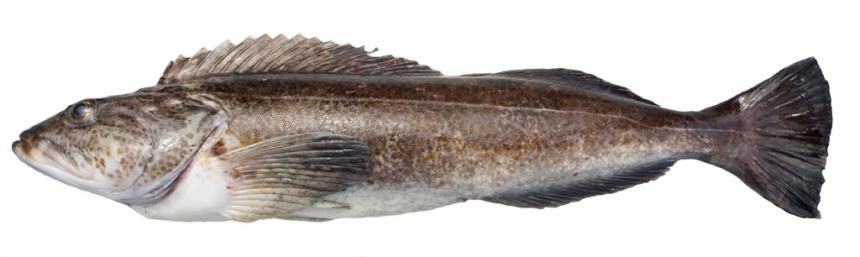
Big mouth full of teeth, mottled brown-grey body, and sometimes bright teal-green flesh inside. Not a true cod — actually a greenling. Found on rocky reefs throughout Puget Sound and the Washington coast. Popular eating fish.
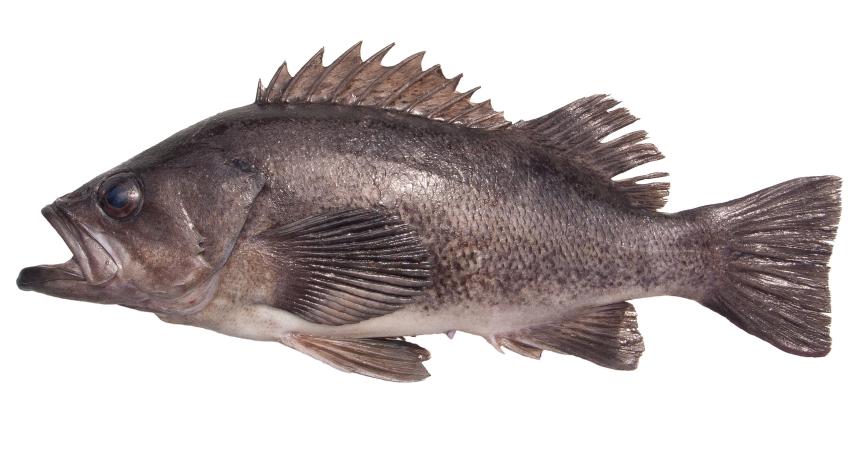
A large family — over 30 species in Washington. Most have spiny dorsal fins, large eyes, and live near rocks and reefs. Colors range from black to orange-red to yellow. Rockfish can live 100+ years, so many species have strict limits or are catch-and-release only.
Freshwater Species
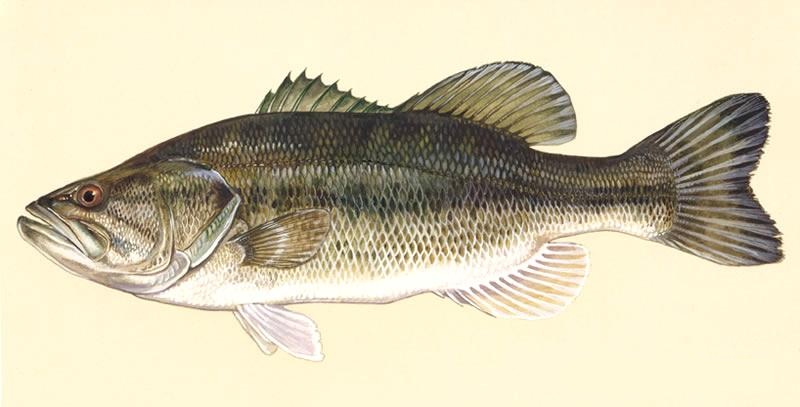
Green back fading to white belly with a dark lateral stripe. The key feature: the jaw extends past the eye. Found in warm lakes and slow rivers across western Washington. A favorite for beginner anglers — aggressive biters that put up a great fight.
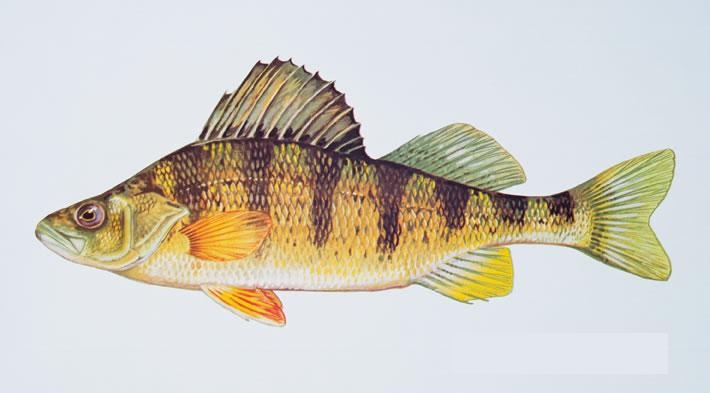
Bright yellow-green sides with 6–8 dark vertical bars and orange-red lower fins. School in large groups, easy to catch, and excellent table fare. Common in lakes throughout the Puget Sound basin. Great first fish for young anglers.
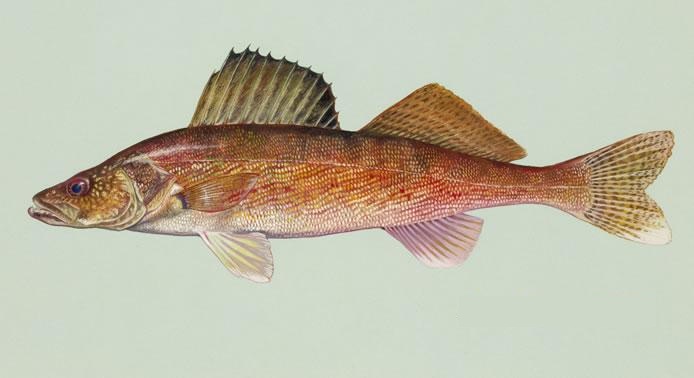
Named for their large, glassy eyes that reflect light in the dark. Golden-olive body with a white tip on the lower tail. Found primarily in eastern Washington reservoirs like Banks Lake and Lake Roosevelt. One of the best-eating freshwater fish.
Hatchery vs. Wild Fish
This is one of the most important things a Washington angler needs to know. Many salmon and steelhead are raised in hatcheries and released into rivers and the Sound. Hatchery fish are marked so you can tell them apart from wild fish — and the rules for keeping them are completely different.
| Hatchery Fish | Wild Fish | |
|---|---|---|
| Fin clip | Adipose fin is clipped off (missing) | Adipose fin is intact |
| Can you keep it? | Usually yes — check regulations | Usually must be released immediately |
| Where to look | Small fin just in front of the tail, on the back | Same location — fin is present |
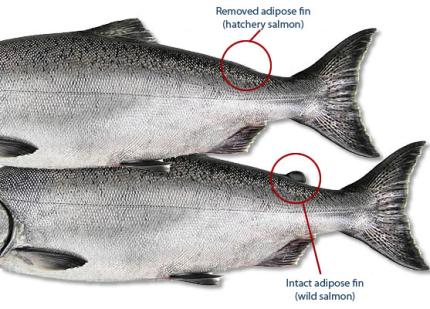
Before you put any salmon or steelhead in your cooler, check the adipose fin — the small, fleshy fin on the back just ahead of the tail. No fin = hatchery = may be kept. Fin present = wild = release it. This rule applies throughout Washington.